
The Complete Guide To 3D Animation And CGI In Modern Commercial Production
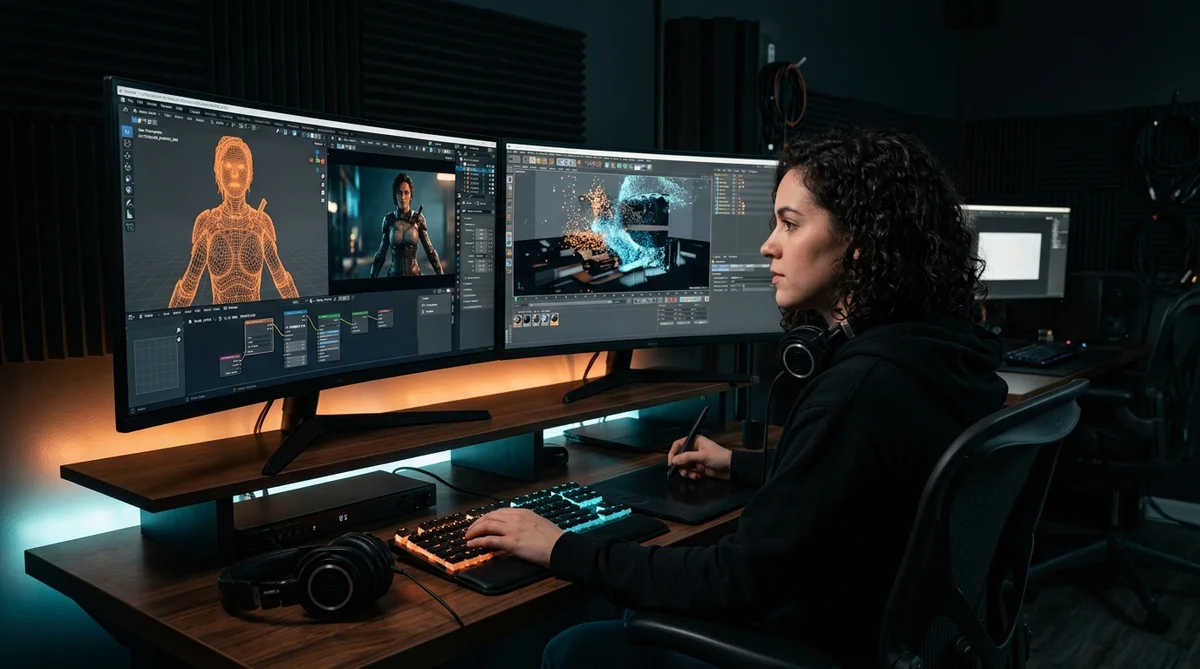
The Transformative Power of Three-Dimensional Craft
Over the past decade, three-dimensional computer-generated imagery has evolved from an exclusive Hollywood visual effects luxury into the central pillar of commercial brand design. Modern consumer expectations for visual sophistication have never been higher. Whether launching industrial medical hardware, presenting luxury automotive design, or dramatizing consumer packaged goods, commercial 3D animation provides creative freedom that traditional live-action camera production simply cannot match.
With physical photography, production teams face substantial logistical hurdles: weather unpredictability, expensive location rentals, delicate prototype shipping, and physical lighting constraints. In contrast, studio-grade 3D animation allows creative teams to explore micro-scale internal mechanics, construct zero-gravity physical simulations, and achieve impossible camera trajectories with absolute artistic control.
Phase 1: Pre-Production and Topological Precision
Every breathtaking 3D commercial sequence originates in disciplined pre-production. Before opening high-end simulation software, our directors construct comprehensive styleframes and concept art that establish color palettes, compositional geometry, and narrative tempo.
Once visual direction is confirmed, production moves into three-dimensional modeling. In commercial work, model topology demands rigorous mathematical cleanliness:
- CAD Data Translation: Industrial clients frequently supply raw engineering CAD models. These files must undergo meticulous retopology to convert heavy parametric surfaces into clean, quad-based polygonal geometry optimized for deformation and real-time viewport manipulation.
- Bespoke Organic Sculpting: When digital assets involve fluid anatomy, ergonomic textiles, or natural terrain, digital sculptors hand-craft micro-creases and surface irregularities that eliminate the sterile appearance common in entry-level computer generation.
- UV Unwrapping and Seam Management: Flattening complex three-dimensional forms onto two-dimensional coordinate planes requires spatial calculation to prevent visual texture stretching during dynamic camera movements.
Phase 2: Physically Based Rendering and Material Depth
What differentiates broadcast-grade 3D animation from amateur computer graphics is the science of light interaction. Physically Based Rendering algorithms simulate how real photons interact with physical matter according to refractive indices and surface microscopic roughness.
Creating believable materials involves building multi-channel shader networks. A metallic casing, for instance, requires distinct procedural passes for diffuse reflection, specular roughness, metallicness, anisotropy, and micro-normal details such as brushed hairline abrasions or subtle fingerprint dust. These micro-imperfections catch glancing light rays, anchoring digital models in physical reality and communicating tactile luxury.
Phase 3: Cinematic Camera Choreography and Lighting
In virtual space, camera possibilities are infinite. However, unrestrained camera acrobatics often disorient viewers and diminish cinematic weight. Experienced 3D animation directors apply the timeless optical principles of classic cinematography.
Optical Lens Modeling
Virtual camera systems accurately replicate real-world focal lengths, sensor dimensions, and chromatic aberrations. An 85mm portrait focal length provides flattering perspective compression for product hero portraits, while a carefully tuned 24mm wide angle adds dynamic spatial drama to high-speed architectural sweeps.
Choreographed Studio Lighting
Just as in physical studio cinematography, virtual three-point lighting dictates mood and form. Key lights establish primary shadows and silhouette definitions, gentle fill lights illuminate ambient details within deep crevices, and sharp rim lights trace the outer contours of dark objects, separating the subject crisply from dark obsidian studio backdrops.
Phase 4: Character Rigging and Physics Simulations
Bringing static geometry to life requires sophisticated skeletal rigging and physical dynamics. For character-driven narratives, character technical directors build intricate deformation hierarchies with dual-quaternion skinning, inverse kinematics, and facial blendshape libraries capable of conveying nuanced human emotion.
Simultaneously, physics engines simulate natural chaos that cannot be hand-keyed frame by frame. Dynamic particle emitters generate sparkling embers, turbulent smoke plumes, and liquid splashes that obey real-world aerodynamic drag and viscosity laws. When integrated seamlessly with character choreography, these secondary motion simulations lend the final render breathtaking visual richness.
Phase 5: Technical Infrastructure and Distributed GPU Farms
Rendering photorealistic 3D frames at 4K resolution requires colossal computational throughput. Each complex frame can involve calculating hundreds of millions of diffuse, specular, and subsurface light rays across multiple volumetric boundaries. Professional studios deploy distributed GPU render clusters powered by dedicated enterprise graphics accelerators.
By parallelizing frame tasks across networked render nodes, production teams slash iteration cycles from weeks to hours. Animators can review photorealistic test passes within minutes, making granular adjustments to camera focus, motion blur, and exposure compensation before locking final frames. This technical infrastructure ensures that tight marketing launch dates are met without compromising optical fidelity or aesthetic detail.
Commercial Case Study: Industrial Product Reveal
A manufacturer of precision medical robotics needed to demonstrate their micro-surgical apparatus to hospital procurement boards before manufacturing was finalized. Physical photography of early prototypes was impossible due to proprietary clinical cleanroom restrictions.
Our studio engineered a ninety-second photorealistic 3D reveal video utilizing client CAD schematics. We developed microscopic camera passes that descended directly into the internal gearboxes, highlighting surgical titanium finishes and magnetic bearings in motion. Volumetric light shafts illuminated optical laser sensors with cinema-grade caustics. The resulting commercial asset enabled the client to secure four institutional pre-orders totaling multi-million dollar contracts months before physical production commenced.
Phase 6: The Modern Rendering Pipeline
The final phase of 3D production involves calculating millions of light bounces per frame into high-dynamic-range color data. Today, studio pipelines leverage two primary rendering approaches:
“The highest achievement in commercial 3D animation is reached when the viewer completely forgets they are looking at computer calculations and experiences pure visual emotion.”
Offline Path Tracing: Engines like Octane, Redshift, and Arnold remain the gold standard for luxury commercial films. By tracing millions of individual light paths through complex refractive glass, subsurface scattering skin, and volumetric smoke, offline engines produce uncompromised visual realism suitable for 4K cinema projection and broadcast advertising.
Real-Time Game Engines: Platforms like Unreal Engine 5 have revolutionized commercial workflows through Nanite micro-polygon geometry and Lumen dynamic global illumination. Real-time rendering enables directors to modify camera orbits, lighting setups, and color grades interactively with clients present, drastically accelerating revision cycles.
Strategic Brand Value and Reusable Asset Libraries
Investing in custom 3D animation provides enduring commercial value that extends far beyond a single promotional campaign. Unlike live-action footage that quickly becomes dated or difficult to repurpose, 3D digital assets remain permanently adaptable.
A single meticulously modeled and textured 3D product asset can generate hundreds of high-resolution print stills, interactive 360-degree web configurations, vertical social advertising cuts, trade show hologram loops, and localized international broadcast variations. Over time, building a proprietary 3D digital studio library lowers continuous content production costs while maintaining visual coherence across every global customer touchpoint.